
Why Acatenango Volcano Weather Changes So Fast
Many hikers feel surprised by how quickly conditions change on Acatenango Volcano. One moment feels warm and clear, and the next brings cold wind and thick clouds. This sudden shift often confuses first-time visitors. However, once you understand how the mountain works, these changes make sense.
Acatenango stands over 3,900 meters above sea level. This extreme height plays the biggest role in the fast and unpredictable conditions. Because of the altitude, wind exposure, and cloud movement, the acatenango volcano weather can change several times in one day. In this guide, we explain why these changes happen and how you can prepare for them.
The Role of Altitude in Acatenango Volcano Weather
Altitude affects temperature, air pressure, and oxygen levels. As hikers gain elevation, temperatures drop quickly. On average, the temperature decreases by about six degrees Celsius for every 1,000 meters climbed. This explains why Antigua can feel warm while the summit of Acatenango feels freezing.
During the day, the lower sections of the trail often feel comfortable. However, as you climb higher, the air becomes thinner and colder. Heat escapes faster at high elevations, especially after sunset. At night, temperatures near the summit often fall below freezing, even during the dry season.
Because of altitude alone, the Acatenango volcano weather can shift within minutes. A sunny hike can suddenly turn cold and windy near camp. This rapid change surprises many hikers who underestimate how powerful altitude can be.
Thin Air Causes Faster Temperature Changes
Thin air cannot hold heat the same way dense air can. Once the sun sets, warmth disappears quickly. Cold air moves in fast, which causes sharp drops in temperature. This explains why evenings feel much colder than expected.
Thin air also affects moisture. Clouds form more easily at high elevations because small changes in pressure cause condensation. As a result, fog and mist can appear without warning. Visibility can drop quickly, especially near the summit.
These conditions explain why the Acatenango volcano weather feels unstable. Small changes in the atmosphere create big differences on the mountain.
Wind Patterns Around Acatenango Volcano
Wind plays a major role in shaping Acatenango’s weather. The volcano sits in an open and exposed area, which allows strong winds to move freely across its slopes. These winds carry cold air from higher elevations and increase the feeling of cold, especially at night.
Near the base, winds usually feel mild. However, as hikers climb higher, wind speed increases. At the summit, strong gusts are common and can make temperatures feel much colder than they actually are. Wind chill becomes a serious factor during overnight hikes.
Wind direction also changes throughout the day. During the afternoon, warm air rises from the lowlands toward the volcano. At night, cooler air flows back down. This daily cycle affects cloud movement and temperature changes. Because of this, the Acatenango volcano weather often feels unpredictable.
Why Cloud Cover Forms So Quickly
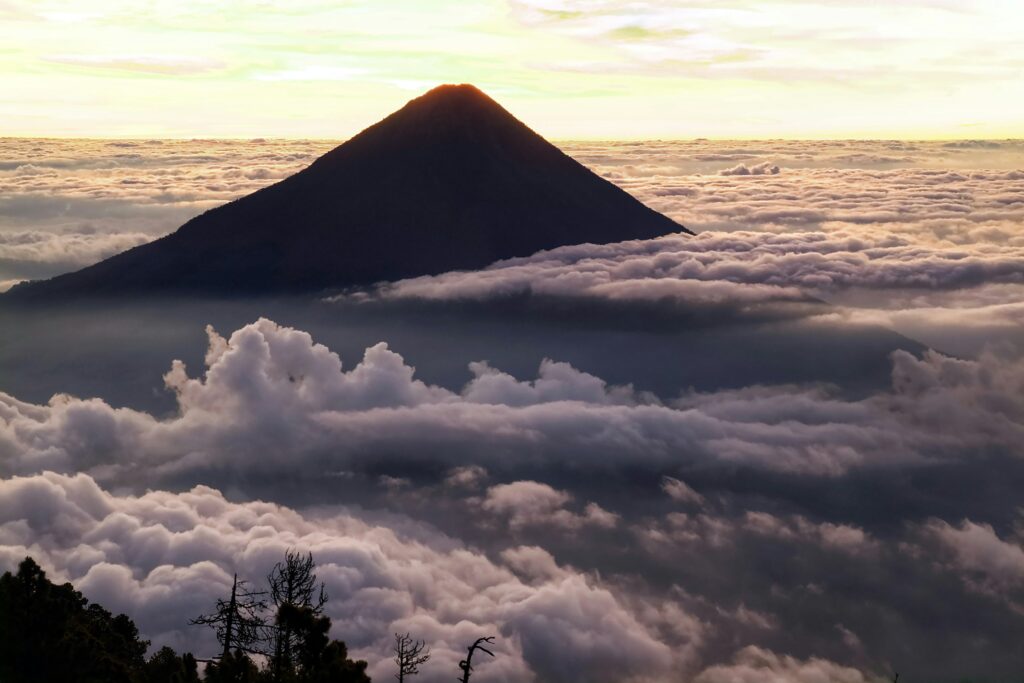
Cloud formation happens when warm air rises and cools. Acatenango’s steep slopes speed up this process. Warm air from surrounding valleys moves upward, cools rapidly, and turns into clouds. These clouds often wrap around the volcano and block views within minutes.
Morning hikes often start with clear skies because the valley air remains cool. As the sun rises, the valleys heat up and push warm air upward. By afternoon, clouds usually form around the volcano. Fog can appear suddenly and reduce visibility on the trail.
This pattern explains why some hikers enjoy clear sunrise views but cloudy afternoons. Cloud movement plays a key role in how acatenango volcano weather feels throughout the day.
Seasonal Weather Changes on Acatenango
Guatemala has two main seasons: the dry season and the rainy season. Each season affects Acatenango differently. During the dry season, skies stay clearer, and rain remains rare. However, strong winds and cold nights still occur.
During the rainy season, clouds form faster and linger longer. Afternoon rain showers become more common, and trails can become muddy and slippery. Fog also appears more frequently, which reduces visibility near the summit.
Even so, sudden weather changes happen year-round. The Acatenango volcano weather never stays completely stable, regardless of the season. This is why preparation matters more than timing alone.
How Fast Weather Changes Affect Hikers
Rapid weather shifts impact comfort, energy, and safety. Cold temperatures drain energy faster and increase fatigue. Strong winds make hiking more difficult and affect balance. Fog reduces visibility on narrow and steep trails.
Rain adds another challenge by making the ground slippery. Wet clothing also increases the risk of hypothermia at high elevations. At night, cold air affects sleep quality, which can make the summit push harder the next morning.
Understanding the Acatenango volcano weather helps hikers prepare for these challenges. Good planning improves safety and enjoyment on the trail.
Why Guided Tours Make a Big Difference
Guided tours help hikers manage fast-changing mountain conditions. Experienced guides watch cloud movement, wind strength, and temperature shifts throughout the hike. They adjust the pace and make decisions based on current conditions.
Guides also know where to set up camp to reduce wind exposure. They understand when to push forward and when to slow down. This experience becomes especially important when the weather changes suddenly.
Choosing a guided tour adds peace of mind, especially for first-time hikers.
How We Help at Tropicana
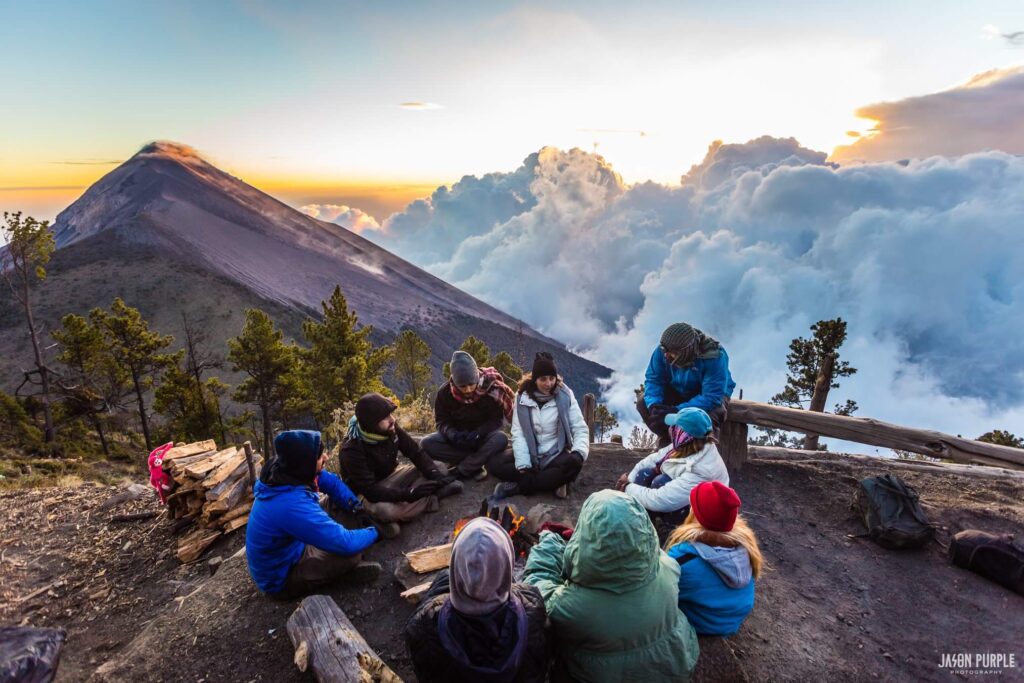
At Tropicana, we design our Acatenango tours with the weather in mind. We prepare our guests for cold temperatures, strong winds, and sudden cloud cover. Our guides explain what to expect and how to stay comfortable throughout the hike.
We offer guided tours to both Acatenango and Pacaya Volcano. In addition, we provide shuttle services if you want to explore other destinations across Guatemala. This makes travel easy before and after your adventure.
We also offer accommodation options in Antigua Guatemala. Staying close to the starting point helps you rest well before your hike and recover afterward. Our team remains available to support you at every step.
If you need help planning your Guatemalan adventure, contact us anytime. We are always happy to assist.
Final Tips for Handling Acatenango Weather
Always pack warm layers, even on sunny days. Temperatures drop fast at higher elevations. Bring rain protection year-round, as weather changes without warning. Start your hike early when possible, since mornings often offer clearer skies.
Most importantly, respect the mountain. Acatenango rewards preparation and patience. When you understand how altitude, wind, and clouds work together, the hike becomes safer and more enjoyable.
Final Thoughts
Acatenango volcano weather changes so fast because of altitude, wind patterns, and cloud cover. These natural forces work together every day and create dramatic shifts in conditions. With the right preparation and guidance, hikers can enjoy one of Guatemala’s most unforgettable adventures.
At Tropicana, we are here to help you experience Acatenango with confidence. Whether you need a tour, transportation, or a place to stay, we’re ready to support your journey.
 Previous Post
 Next Post