
Active Volcanoes in Guatemala: Is Acatenango Really Active? A Complete Guide for Travelers
Guatemala is a country full of color, culture, and dramatic landscapes. One of its most striking features is its long chain of volcanoes that stretches across the southern highlands. These towering peaks shape the land, influence the climate, and attract travelers from around the world. In fact, Guatemala sits along the Pacific Ring of Fire, which explains why the country has more than 30 volcanoes, with several still showing signs of activity.
In this guide, we will explore the topic of active volcanoes in Guatemala and focus on one important question many travelers ask: Is Acatenango an active volcano? Along the way, we will also look at other major active volcanoes, explain how volcanoes are classified, and share how you can safely experience these natural wonders with the help of Tropicana, a trusted tour operator in Guatemala.
Guatemala’s Volcanic Landscape
To begin with, it helps to understand why Guatemala has so many volcanoes. The country lies along the Central American Volcanic Arc, a chain of volcanoes created by tectonic plate movement. Here, the Cocos Plate moves under the Caribbean Plate, which causes magma to rise to the surface. Over time, this process has formed dozens of volcanoes across the region.
As a result, Guatemala offers one of the most impressive volcanic landscapes in Central America. You will find cone-shaped stratovolcanoes, lava fields, ash plains, and crater lakes. Some volcanoes remain quiet, while others continue to erupt regularly.
Because of this, volcanoes play a major role in tourism, agriculture, and even local culture. Many communities live near volcanoes because volcanic soil is rich and fertile. At the same time, people must respect the power of these natural giants.
What Are Active Volcanoes in Guatemala?
Before we talk about Acatenango, let’s clarify what scientists mean by “active.”
An active volcano is one that has erupted in historical times and still has the potential to erupt again. This does not mean it erupts every year, but it shows ongoing signs of activity such as lava flows, ash clouds, gas emissions, or earthquakes.
In contrast:
- A dormant volcano has erupted in the past but is currently quiet.
- An extinct volcano has not erupted in recorded history and is unlikely to erupt again.
Now, let’s look at the most well-known active volcanoes in Guatemala.
Major Active Volcanoes in Guatemala
1. Volcán de Fuego
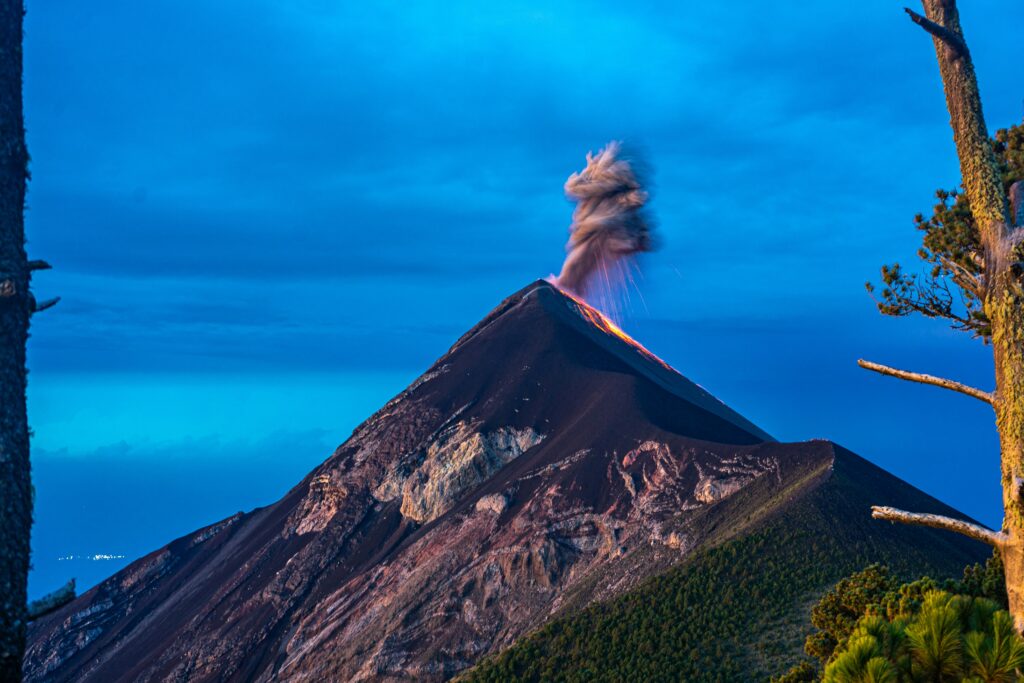
Fuego is the most active volcano in Guatemala and one of the most active in Central America. It erupts frequently, sometimes every few days. These eruptions often include lava fountains, ash plumes, and loud explosions.
Fuego sits right next to Acatenango, which makes it even more dramatic. From Acatenango’s slopes, hikers can watch Fuego erupt in real time. This experience alone makes the region world-famous.
2. Pacaya Volcano
Pacaya is another star among the active volcanoes in Guatemala. It is located about an hour from Guatemala City and is one of the easiest volcanoes to hike.
Pacaya regularly releases lava, smoke, and gas. Its last major eruption was in 2018, but it continues to show constant activity. Because of its accessibility, Pacaya is very popular with tourists who want a short but exciting volcano experience.
3. Santiaguito
Santiaguito is located in western Guatemala near the city of Quetzaltenango. It formed after a massive eruption of Santa María in 1902. Since 1922, Santiaguito has been active almost continuously.
It produces lava flows, ash clouds, and small explosions. Although it is not usually open for hiking, it remains one of the most scientifically important volcanoes in the country.
4. Santa María
Santa María is famous for its catastrophic eruption in 1902, one of the largest eruptions of the 20th century. While it appears calm today, it is still classified as active because of its connection to Santiaguito.
Together, Santa María and Santiaguito form a powerful volcanic system that researchers monitor closely.
Acatenango: A Volcanic Giant
Acatenango stands at about 3,976 meters (13,045 feet), making it the third-highest volcano in Central America. It rises above the colonial city of Antigua and dominates the surrounding skyline.
Acatenango is part of a volcanic complex that includes:
- Volcán de Fuego (active)
- Volcán Yepocapa (dormant)
This location places Acatenango right in the heart of Guatemala’s volcanic zone.
Because of its height and scenic trails, Acatenango is one of the most popular volcano hikes in the country. Thousands of travelers attempt the trek every year, often as an overnight adventure.
Is Acatenango One of the Active Volcanoes in Guatemala?
This is where things get interesting.
Technically, Acatenango is not classified as an active volcano. Instead, scientists consider it dormant.
The last recorded eruption of Acatenango happened in 1972, when it released ash and volcanic material. Since then, it has shown only minor fumarolic activity, such as small gas emissions near the summit.
Because it has not erupted in recent decades, Acatenango does not meet the strict definition of an active volcano. However, it is also not extinct. It still has the potential to erupt again in the future.
So, while Acatenango is not listed among the main active volcanoes in Guatemala, it remains geologically alive.
Why Acatenango Still Feels “Active”
Even though Acatenango is dormant, hiking it feels like stepping into a living volcanic world. This is mainly because of its neighbor, Fuego.
From Acatenango’s campsites, you can see Fuego erupt every night. You will hear explosions, see glowing lava, and watch ash rise into the sky. This makes Acatenango one of the best places on Earth to safely observe an active volcano.
In other words, Acatenango may sleep, but it sits right beside one of the most active volcanoes in the world.
Hiking Acatenango: What to Expect
Hiking Acatenango is challenging, but very rewarding. The trail usually takes two days, with an overnight camp near the summit.
Along the way, hikers pass through:
- Farmland and villages
- Cloud forests
- Rocky volcanic terrain
- High-altitude cold zones
At the top, you get panoramic views of Antigua, Lake Atitlán, and several volcanoes, including Fuego, Pacaya, and Agua.
Because of the altitude and weather, proper planning is essential. This is where choosing a reliable tour operator becomes very important.
Explore Active Volcanoes in Guatemala with Tropicana
If you want to experience the best active volcanoes in Guatemala, Tropicana is here to help.
Tropicana is a trusted tour operator in Guatemala that offers:
- Guided tours to Acatenango and Pacaya
- Safe and well-organized hiking experiences
- Shuttle services across Guatemala
- Accommodation options in Antigua Guatemala
With Tropicana, you do not need to worry about logistics. Their team handles transportation, guides, equipment, and planning. This allows you to focus on enjoying your adventure.
The Importance of Volcano Tourism in Guatemala
Volcano tourism plays a big role in Guatemala’s economy. It creates jobs, supports local communities, and promotes environmental awareness.
At the same time, responsible tourism is key. Travelers must respect safety rules, follow guides, and protect natural areas.
When done right, visiting the active volcanoes in Guatemala becomes both exciting and sustainable.
Final Thoughts
So, is Acatenango one of the active volcanoes in Guatemala?
The scientific answer is no. Acatenango is considered dormant because it has not erupted since 1972. However, it remains a living volcano with the potential for future activity.
More importantly, Acatenango offers one of the most unforgettable volcano experiences in the world. From its slopes, you can witness Fuego’s powerful eruptions, hike through diverse landscapes, and enjoy breathtaking views.
Whether you choose to hike Pacaya, observe Fuego, or conquer Acatenango, Guatemala’s volcanoes will leave a lasting impression.
And with Tropicana as your travel partner, you can explore these natural wonders safely, comfortably, and with expert guidance.
If you are dreaming of adventure, nature, and unforgettable views, now is the perfect time to discover the active volcanoes in Guatemala. Contact Tropicana anytime and start planning your Guatemalan adventure today.
 Previous Post
 Next Post